
- Home
- History, Civilization & Culture
- Ancient World & Civilizations
Ancient Egypt: Civilization and Power
How the Nile Created One of the Longest-Lasting Civilizations in Human History
1. The Nile and the Making of Egypt
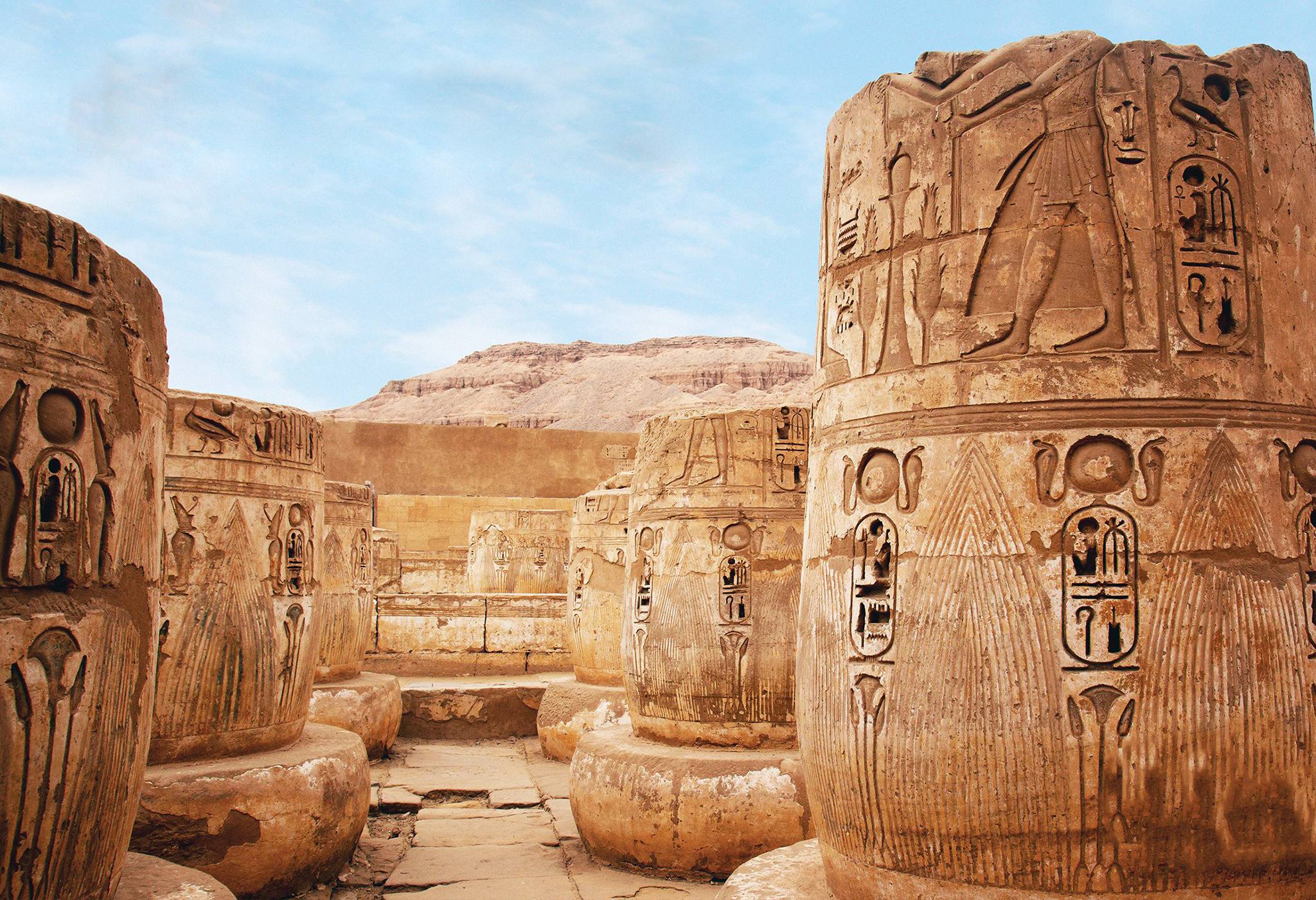
Egypt begins with geography. The Nile was not simply a river flowing through an otherwise hostile landscape. It
was the central organising force of Egyptian civilisation. Much of the country was surrounded by desert, while
the Nile Valley provided water, fertile agricultural land and a natural corridor connecting different parts of the
country. The river created the possibility of concentrated settlement in an environment where large-scale
agriculture would otherwise have been extremely difficult. This produced one of the fundamental geographical
contrasts of the ancient world: desert and river, scarcity and abundance, isolation and connectivity.
The Environmental Advantage:
Unlike the erratic, violent floods of the Tigris and Euphrates in Mesopotamia, the Nile’s annual inundation was remarkably predictable. This fostered an Egyptian worldview defined by cosmic order (ma'at) and stability rather than existential anxiety.
Geographical Isolation:
Natural desert barriers on the east and west, alongside cataracts to the south, granted Egypt a rare degree of immunity from external invasion for millennia, allowing its cultural grammar to deepen uninterrupted.
A Human Response:
A Human Response: Agriculture became the economic foundation of society. The annual rhythm of the river shaped agricultural life, while the concentration of settlement along the valley made administration possible on a large scale. But geography alone never creates civilisation.
2. Before the Pharaohs
3. The Pharaoh and the Idea of Divine Kingship
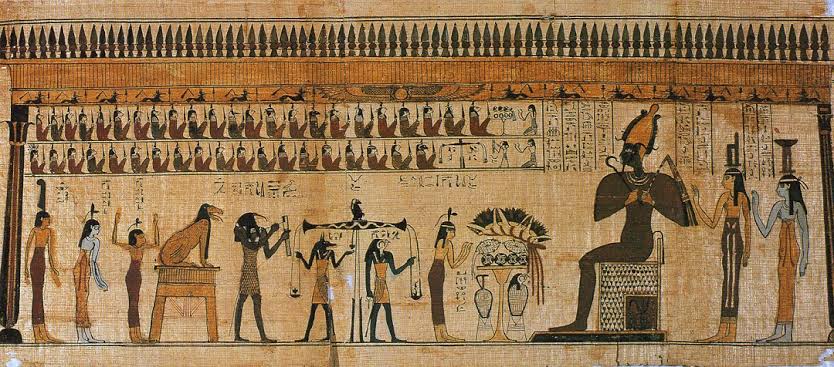
The Egyptian king was not merely a political ruler in the modern sense. Kingship was embedded within religion,
ritual and the Egyptian understanding of cosmic order.
- The Concept of Ma’at: The idea of ma'at expressed a broad conception of order, balance, justice and rightness, and the king was understood to have a central responsibility for maintaining that order. Political authority was therefore connected to a much larger conception of how the universe was supposed to function.
- The Bureaucratic Reality: This helped give Egyptian kingship an extraordinary ideological depth. Taxes, labour obligations and administrative commands could be understood within a wider social and religious order rather than simply as demands imposed by a government. Yet Egyptian kingship should not be reduced to the simple idea that the pharaoh personally controlled everything. Egyptian society was complex. Provincial officials, priests, scribes, military officers, craftsmen, agricultural workers and local elites all participated in the functioning of the state. The king stood at the symbolic centre of this system, but the system itself depended upon thousands of people and institutions. The power of the pharaoh was therefore also the power of organisation.
The Administrative Architecture: Nomes and Nomarchs
Beneath the unifying authority of the pharaoh lay a decentralised administrative network built upon ancient geographical divisions called nomes (districts):
- Each nome was governed by a nomarch (provincial governor).
- During periods of strong central rule (Old and Middle Kingdoms), nomarchs acted as loyal royal agents collecting taxes and mobilizing labor.
- During intermediate periods of decentralization, they functioned almost as independent regional lords, demonstrating the flexible federalism of the Nile Valley.
The Power Behind the Throne: The Office of the Vizier (Tjati)
4. The Old Kingdom and the Age of the Pyramids
5. Beyond the Pyramid
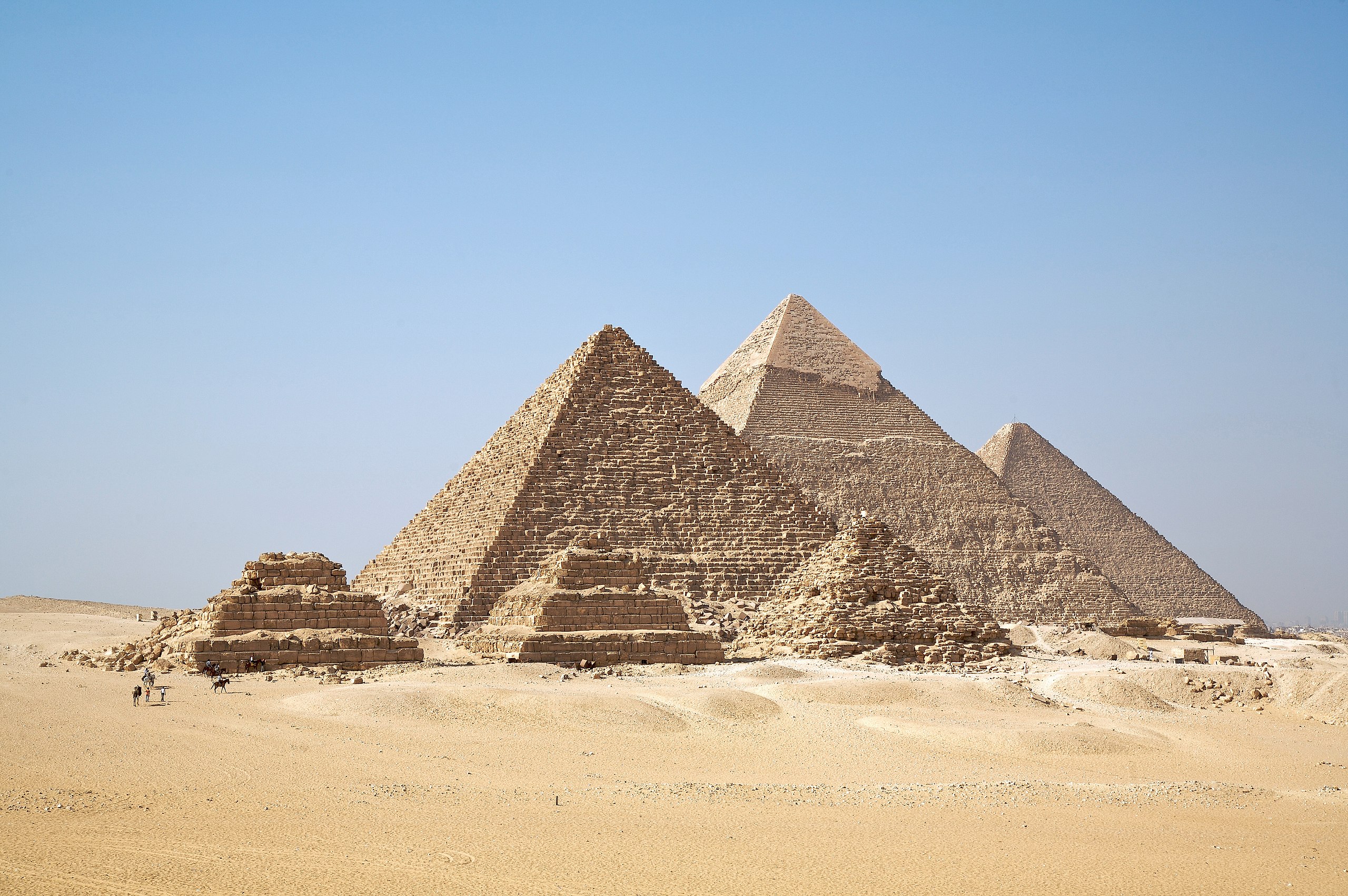
The obsession with pyramids has sometimes reduced ancient Egypt to architecture. But the civilisation was
much larger than its monuments. Most Egyptians did not live as priests or royal officials. They were farmers,
artisans, fishermen, soldiers, administrators and members of local communities whose daily lives were shaped
by agriculture, family relationships, religious practices and obligations to the state.
The great monuments were only the visible surface of this world. Beneath them existed a society capable of producing food surpluses, collecting resources, maintaining transport and agricultural systems, supplying
institutions and supporting specialised occupations. This is why Egyptian civilisation should be understood as a
system rather than a collection of spectacular achievements. Its strength did not come from one invention. It
came from the interaction of many institutions.
6. Religion and the Egyptian Worldview
Religion was not a separate department of Egyptian life. It was woven into almost everything. The Egyptians
imagined a universe inhabited by gods whose powers were connected with nature, kingship, fertility, death,
protection and cosmic order. Different gods became particularly important in different periods and regions, and
religious traditions changed over time, but concerns with order, death, renewal and the relationship between
human beings and the divine remained remarkably persistent.
7. A Society Built on Agriculture and Institutional Economy
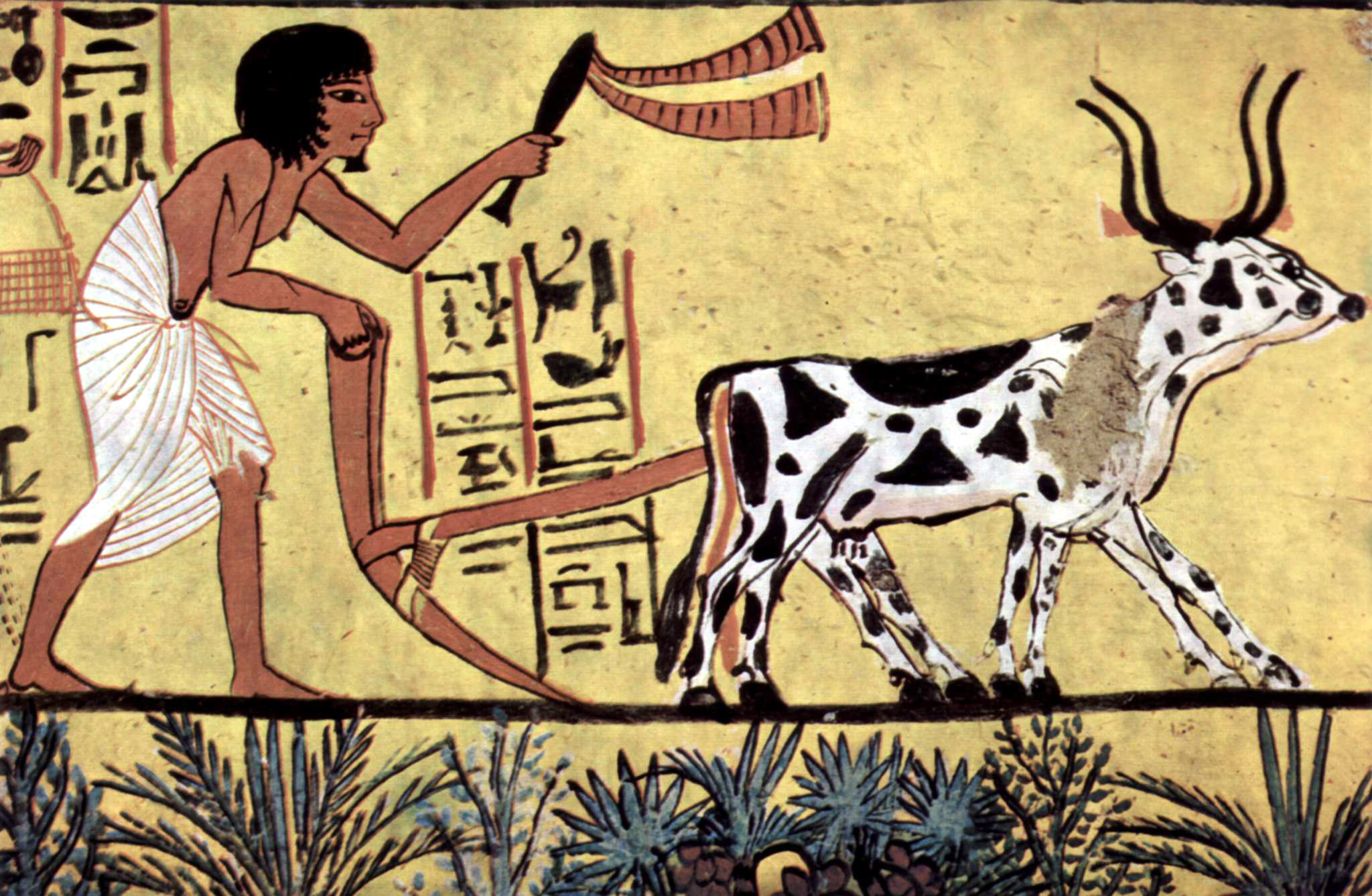
The grandeur of Egyptian civilisation rested on agriculture. The Nile Valley produced the food that sustained the
population and generated the surplus necessary for the state. Farmers were therefore at the foundation of the
entire system. Agricultural production supported the royal court, temples, officials, craftsmen and soldiers and
allowed specialised occupations to develop.
- The Non-Monetary Economy: The Egyptian economy was neither a modern market economy nor a simple subsistence system. Ancient Egypt operated without a coined currency for the vast majority of its history. Values, wages, and taxes were calculated using weight units of metal—most notably the deben (approx. 91 grams) of copper, silver, or gold—alongside grain as a primary standard.
- Redistributive Networks: The state collected agricultural surplus as tax, storing it in massive royal and temple granaries. This surplus was systematically redistributed to pay artisans, scribes, miners, and laborers through standardized rations (bread and beer), insulating the economy from market volatility and securing state projects.
8. Hieroglyphs and the Power of Writing
9. The Middle Kingdom: Egypt Reimagines Itself
Egyptian civilisation did not remain permanently stable. The end of the Old Kingdom was followed by political
fragmentation and what is conventionally known as the First Intermediate Period. Central authority weakened,
regional powers became more important and the political order had to be reconstructed.
10. The New Kingdom and the Rise of Imperial Egypt
The Amarna Network and Diplomacy
As Egypt expanded, its foreign policy matured into sophisticated interstate diplomacy:
- The Amarna Letters: Discovered at Akhetaten, this correspondence written in Akkadian (the international lingua franca) reveals a network of royal marriages, gift exchanges, and treaty negotiations between Egypt and powers like Babylon, Mitanni, and Hatti.
- The Treaty of Kadesh: Clashes with the Hittite Empire led eventually to the Treaty of Kadesh (c. 1259 BCE)—the earliest surviving peace treaty in human history—illustrating that Egyptian power had evolved into balance-of-power geopolitics.
Akhenaten and the Limits of Political Power
11. Women, Family and Everyday Life
Ancient Egyptian society was hierarchical, but it was not a society in which only men mattered. Women could
own property, inherit wealth and participate in legal and economic activities in ways that distinguish ancient
Egypt from many other societies of the ancient world. Royal women could also possess substantial political and
religious importance.
12. The Workers Who Built Egypt
For centuries, popular imagination portrayed the pyramids as monuments built by vast armies of slaves. The
historical picture is considerably more complicated. Large-scale construction depended upon organised labour
TAUQEER ZAFAR | Ancient Egypt: Civilization and Power | 6
that included skilled workers, labourers and agricultural communities whose obligations could be connected to
state projects.
13. Egypt and Its Neighbours
Egypt was never completely isolated. The Nile Valley provided a strong geographical core, but Egypt was
connected to surrounding regions through trade, diplomacy, migration and warfare. Nubia to the south was
particularly important, while the eastern desert provided routes toward the Red Sea and the Sinai connected
Egypt to regions beyond the Nile Valley
14. The Limits of Pharaoh’s Power
This tension was not necessarily a sign of failure. It was a structural feature of a civilisation spread along a long
and narrow river valley. Maintaining political unity required institutions capable of connecting distant
communities to a common centre. When those institutions weakened, regional power naturally became more
important.
Summary Comparison: Egypt vs. Mesopotamia
| Institutional Feature | Ancient Egypt | Ancient Mesopotamia |
|---|---|---|
| Geographical Setting | Predictable Nile inundation; natural desert isolation | Unpredictable, violent flooding; open, vulnerable geography |
| Cosmological View | Optimistic order (ma’at); eternal afterlife continuity | Cosmic anxiety; legal codification to manage chaos |
| Economic Mechanism | Centralized granary redistribution using deben and grain standards | Early commercial market dynamics alongside temple/palace economies |
| Political Structure | Unified divine kingship balancing local nome administration | Independent city-states evolving into fluctuating empires |
15. Why Did Egyptian Civilization Last So Long?
16. When the System Began to Change
The final centuries of ancient Egyptian history brought Persian, Macedonian and later Roman domination. Yet
even under foreign rulers, Egyptian traditions continued. The Ptolemaic rulers adopted elements of pharaonic
kingship and supported Egyptian temples. Egyptian religious traditions survived, and local cultural practices
continued even as political sovereignty passed to outsiders.
This is perhaps one of the clearest demonstrations of the difference between a state and a civilisation.
A state can fall.
A civilisation can survive the fall of its state.
Egyptian civilisation had become larger than any particular dynasty
17. The Real Power of Ancient Egypt
Egypt’s greatest power was not simply the ability to build enormous monuments. It was the ability to coordinate.
18. Civilization as Continuity
There is another lesson in Egypt’s long history. Civilisations survive not because nothing changes, but because
some things change while others remain meaningful.
Conclusion: The Civilization That Learned to Endure
- Ancient Egypt lasted for thousands of years because it addressed a problem every civilisation eventually faces: how do you preserve order in a changing world?
- The Egyptians answered that question through institutions. They built a state capable of managing agricultural resources. They created writing systems capable of preserving information. They developed religious ideas that connected society with a larger cosmic order. They created administrative structures capable of coordinating enormous projects. They developed traditions strong enough to survive political disruption. And when the old political order broke down, Egypt repeatedly reconstructed itself.
- That is why the pyramids should not be the final image of ancient Egypt.
- The pyramid is only the visible monument. The real achievement lies beneath it—in the farmer producing the grain, the administrator recording resources, the craftsman shaping stone, the priest maintaining ritual, the official managing the province, the soldier protecting the frontier and the ruler attempting to hold the entire system together.
- Civilisation is never built by monuments alone. It is built by millions of ordinary acts repeated across generations.
- Ancient Egypt understood this perhaps better than almost any civilisation of the ancient world.
- Its greatest monument was not a pyramid.
- It was continuity itself
-
Ancient World & CivilizationsAncient Egypt: Civilization and Power
-
Ancient World & CivilizationsThe Day a Civilization Stops Changing
-
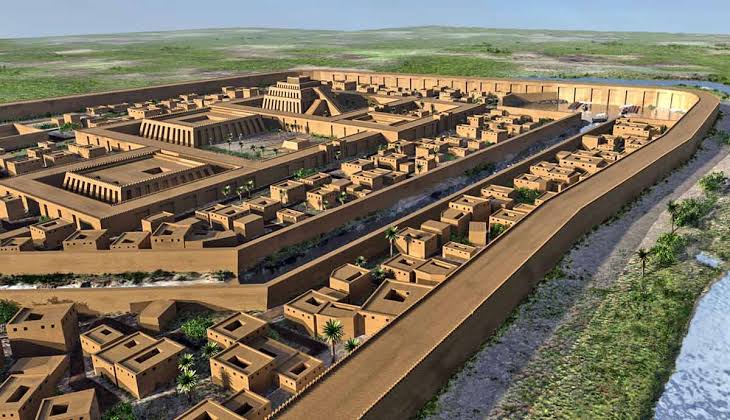 FeaturedMesopotamia: The First Urban Civilization
-
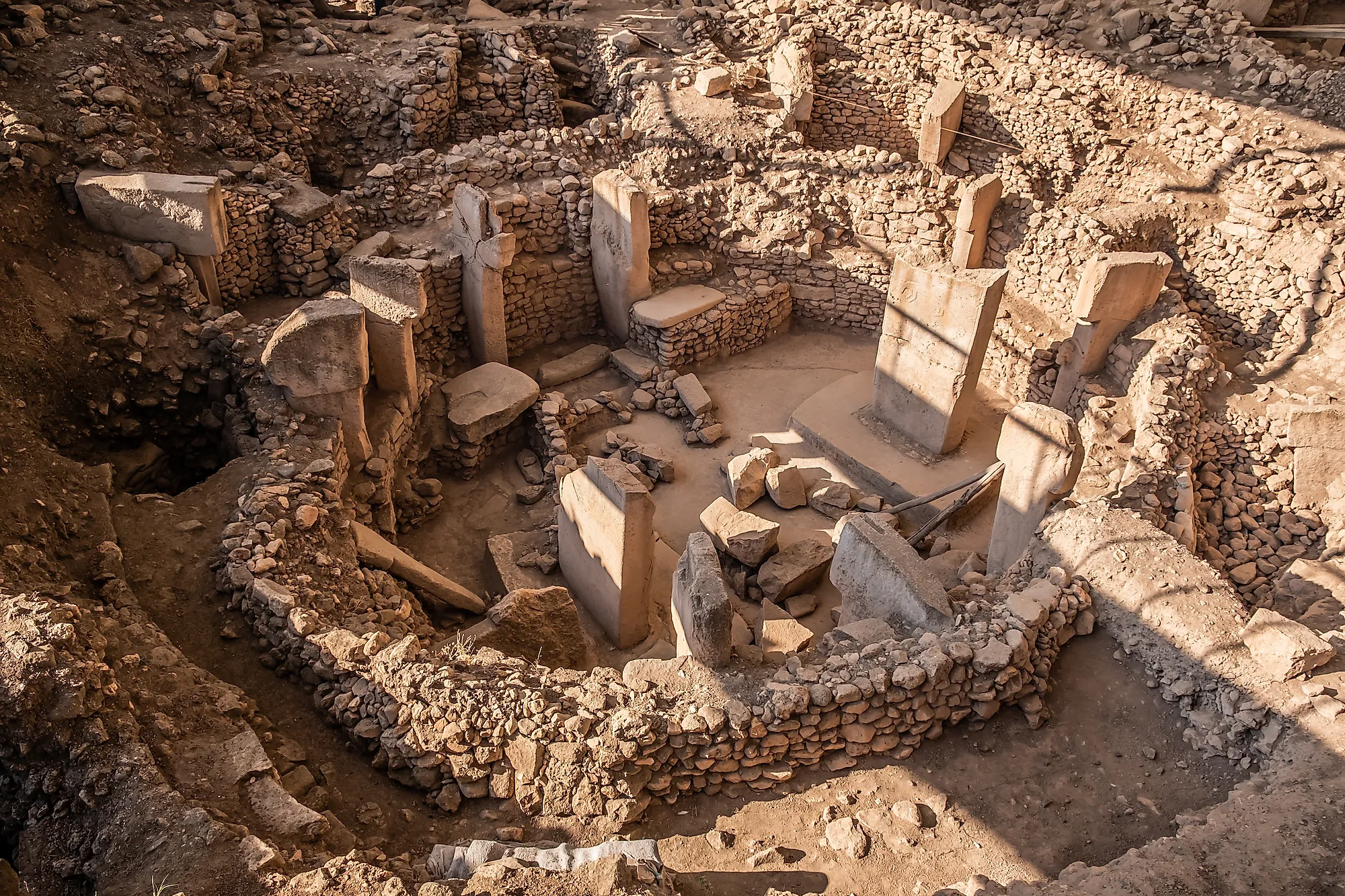 Art & CultureRise of the First Cities - How Human Beings Learned to Live Together at an Unprecedented Scale
-
 Book AnalysisA More Uncertain World
-
 Book AnalysisWhy Hope Still Matters
-
 History, Civilization & CultureWhat Do Civilizations Leave Behind?
Table of Contents
Ancient Egypt: Civilization and Power
Home History, Civilization & Culture Ancient World & Civilizations Ancient Egypt: Civilization and Power Facebook Twitter LinkedIn WhatsApp Telegram How
The Day a Civilization Stops Changing
The Hidden Story Behind the Rise, Transformation and Decline of Great Societies HISTORY, CIVILIZATION AND CULTURE | TAUQEER ZAFAR Imagine
Mesopotamia: The First Urban Civilization
How the Land Between Two Rivers Changed Human History HISTORY, CIVILIZATION AND CULTURE | TAUQEER ZAFAR The Land Between Two
Rise of the First Cities – How Human Beings Learned to Live Together at an Unprecedented Scale
HISTORY, CIVILIZATION AND CULTURE | TAUQEER ZAFAR For most of human history, people did not live in cities. They moved

Why Geography Still Decides Global Power
From mountains and oceans to chokepoints and resources, geography continues to shape the rise and fall of nations.

Books for a More Thoughtful Life
In a world filled with notifications, deadlines, and endless distractions, finding time to slow down and think deeply can feel

Journeys That Change You
Some journeys take you to new places. Others take you to a new version of yourself. Travel is often described
A More Uncertain World
The world around us is changing faster than ever. From technological breakthroughs and economic shifts to climate challenges, changing social
Why Hope Still Matters
Life does not always go according to plan. We face disappointments, failures, uncertainty, loss, and moments when the future feels

The Anxious Mind in a Noisy World
We live in a world that rarely becomes quiet. Our phones constantly buzz with notifications. Social media gives us an
What Do Civilizations Leave Behind?
Empires rise, cultures transform, and cities turn to ruins. Yet the deepest legacy of a civilization is not in stone,